
Biometrics providers prepare for emerging wave of biometrics demand
The tremendous commercial opportunity for biometrics is shown in a major provider merger and growing demand from airports to the internet. The week’s top stories on Biometric Update illustrate the land-rush developing in age assurance and already underway in border control, as well as national digital identity and ensuring trust as a wave of AI agents arrives.
Precise Biometrics and Fingerprint Cards announced a merger agreement, creating a Swedish biometrics giant with a full stack of sensors, hardware, algorithms and software. The deal values FPC at approximately $14.5 million, but could create up to $4.8 million in cost synergies, along with cross-selling and product development opportunities.
Avoiding those airport lines
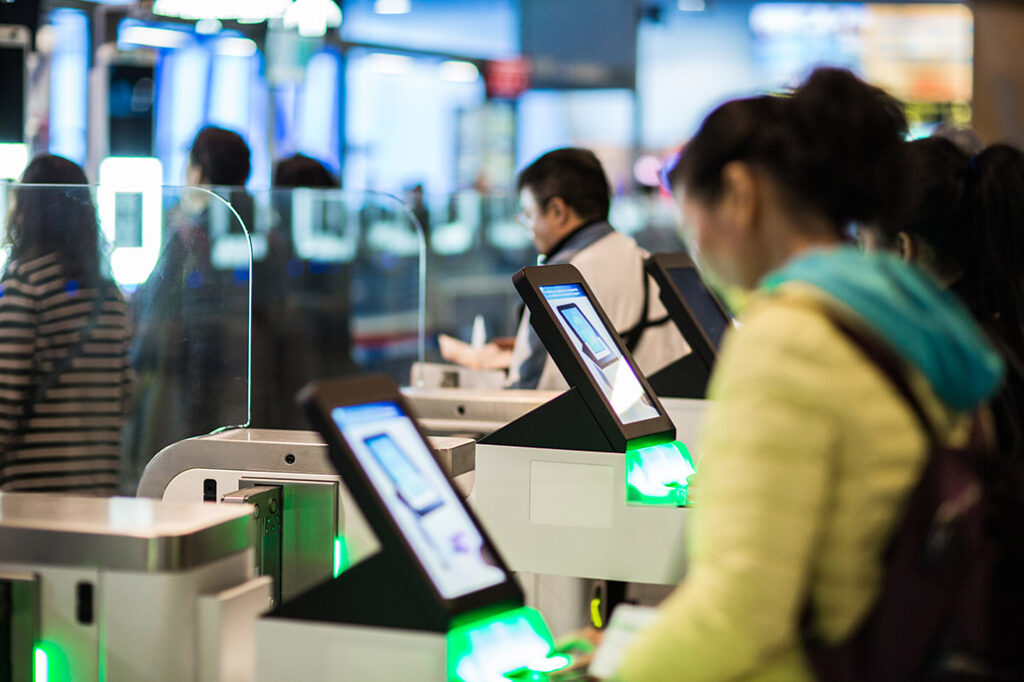
Portugal has adopted the Travel to Europe app as part of its EES border control implementation without increasing airport lines and wait times. It is the second country to adopt Frontex’ biometric app, developed with tech from Signicat subsidiary Inverid and iProov.
Long airport lines are all too familiar, and biometric corridors could help prevent them. Alan Goode explores Paravision’s biometric corridor pitch with partner AiFi at PTE World London 2026 in a column.
Online age and liability anxiety
Businesses are adopting biometric facial age estimation at a rapid pace for an emerging technology that is not yet accompanied by robust testing methodologies and capacity, Ingenium’s Chris Allgrove pointed out in an EAB workshop this week. Experts from KJR, Cognitec, NIST, the University of Southampton, Ghent University and Ofcom discussed how far the FAE ecosystem has come and important next steps.
A policy framework for AI from the White House not only prioritizes age assurance, it specifically suggests “parental attestation” as an appropriate method. It could also open up a new market for age estimation and verification providers. And regulators are not the only stakeholder that can drive platforms to adopt age checks. The jury in a California civil lawsuit has ruled Meta and YouTube must pay $6 million to a plaintiff who began using the platforms in childhood, specifically raising minimum age enforcement questions for Meta and setting an expensive precedent.
Age checks are coming to all iPhone and iPad users in the UK, with the EU to follow, so Apple can apply age filters. Yoti CEO Robin Tombs tells Biometric Update in emailed comments that the move sends a clear positive about the importance of age assurance, but does not address some important scenarios.
MOSIP implementations advance
Sri Lanka has closed submissions from managed service providers for its MOSIP-based national digital ID system, and plans to evaluate its MSP options in April. A phased rollout is planned over a two year period to ensure the necessary capabilities and core infrastructure are in place before a transition away from the previous national ID is complete.
Zambia has revealed some details of its planned MOSIP implementation planned for this year. SZI will build the country’s digital ID through a largely home-grown approach, but also contract an international technology partner.
Trust shields up
iProov argues in an infosheet that AI agents are on the cusp of striking a blow to public trust on the same scale as deepfakes due to an “accountability vacuum.” The company’s Johan Sellström will demonstrate its solution for binding AI agents to human intent cryptographically in a keynote at RSA Conference 2026.
The impact deepfake fraud has had on hiring practices and what businesses can do to detect it was the focus of Socure Head of Product Deepanker Saxena’s discussion with the Biometric Update Podcast.
Testing patience
The EU may need its own independent biometrics evaluation capability comparable to NIST in the U.S. to ensure tech sovereignty, according to a policy brief from the EU Innovation Hub for Internal Security. The brief was coordinated by eu-LISA with cooperation from the EC, Europol and Frontex.
NIST released an update to its latent fingerprint biometrics dataset SD 302, as well as open-source fingerprint data quality assessment software OpenLQM, to help improve software and expert performance alike.
Please let us know if you come across any podcasts, videos or other content we should share with the people in biometrics and the broader digital identity community in the comments below or through social media.
Related Posts
-
 March 10, 2026
 -
 August 19, 2025
 -
 December 18, 2025
 -
 April 1, 2025
 -
 July 16, 2025
 -
 April 17, 2025

Comments