
Ireland wants to make its welfare card more like a national ID
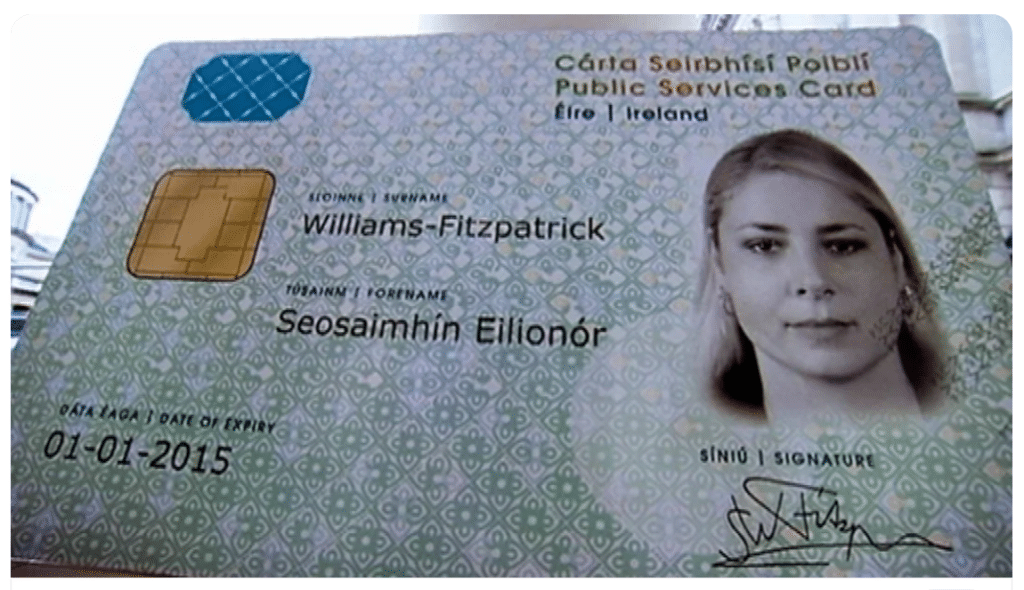
Ireland’s government wants to enable citizens to use Public Services Cards (PSC), currently distributed by the Department of Social Protection (DSP) to welfare recipients, as a valid form of identification for financial services. Critics, however, say that the move would introduce a “de facto national identity card” without providing a proper legislative framework or considering data protection implications.
A proposal to use Public Services Cards for identification was brought to the Irish Cabinet on Tuesday as part of the proposed Social Welfare and Other Matters Bill 2026. According to the proposal,the card could be used for identity verification at credit unions, banks and utility providers.
Cardholders would also be able to add their date of birth, allowing them to use the card for age verification, The Irish Times reports. Unlike most EU members, Ireland does not issue national ID cards.
Critics, however, say that using the card in this way would only compound legal issues rather than resolve them.
“The PSC was originally introduced for social welfare purposes,” says TJ McIntyre, chair of non-profit organization Digital Rights Ireland (DRI). “Now it is being turned into a de facto national identity card. There has been no public debate about introducing a national identity card and no proper legislative framework.”
Joined by the Irish Council for Civil Liberties (ICCL), Digital Rights Ireland argues that key elements of the PSC are already unlawful.
The Public Services Card was introduced in 2011. The card contains a person’s name, photograph, signature and a Personal Public Service (PPS) Number, a unique identifier required to work, access social welfare, public services and healthcare in Ireland.
Citizens can receive the card through a biometric enrollment process known as SAFE Registration, during which they submit facial photos and electronic signatures.
The government has so far issued some 3.2 million PSCs, while the card has expanded its use to applying for a passport and driver’s license and accessing digital government services through MyGovID.
After a protracted investigation, the Irish Data Protection Commission (DPC) ruled in June 2025 that the Department of Social Protection’s collection of facial data for the Public Services Card was not in line with GDPR. Over the past 15 years, the Department has collected facial records from 70 percent of the country’s population.
The agency was given a deadline of nine months to stop processing biometric data through SAFE Registration unless it could identify a valid lawful basis. It was also fined 550,000 euros (US$648,000) for GDPR breaches.
The Department has challenged DPC’s decision in court with resolution pending.
A previous decision from 2019 also found that there is no legal basis for public bodies other than the Department of Social Protection to require people to present the card before accessing services. The data watchdog, however, cancelled the enforcement of the decision after negotiations with the DSP.
Related Posts
-
 January 6, 2026
 -
 July 29, 2025
 -
 April 15, 2026
 -
 October 24, 2025
 -
 November 21, 2025
 -
 February 16, 2026
Article Topics
digital government | digital ID | financial services | ID card | Ireland | national ID

Comments