
OpenID launches working group to ease KYC with mDLs
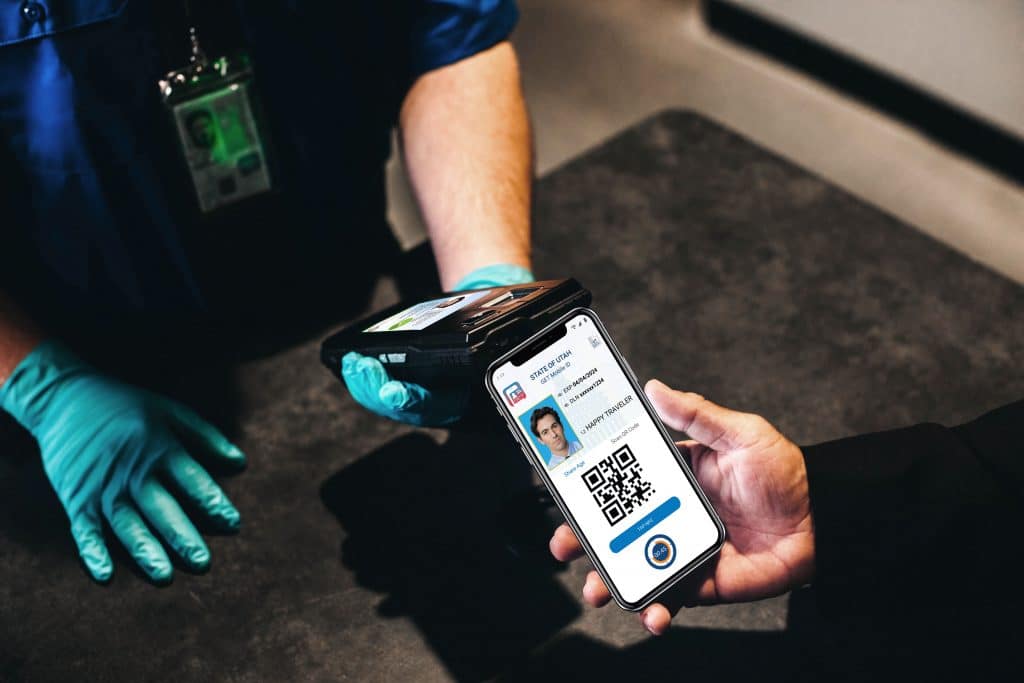
The OpenID Foundation is launching a new eKYC work item in response to NIST’s recently-introduced draft guidance for financial institutions implementing mobile driver’s licenses for identity verification.
OIDF participated in the NIST NCCOE Project that led to the publication of NIST NCCoE Mobile Driver’s Licenses (mDL) Project (Special Publication 1800-42), also known as Digital Identities – Mobile Driver’s License (mDL): Accelerating Development and Adoption of Digital Identity for Financial Institutions. The organization also co-hosted several interoperability events with NIST and industry participants.
SP 1800-42 was co-authored by representatives of NIST, MITRE, Coralline and Spherical Cow Consulting, and released in March. It incorporates the OpenID for Verifiable Presentation 1.0, High Assurance Interoperability Profile 1.0 and OpenID Connect protocols.
NIST will host a webinar on the mDL adoption framework on April 23, and is accepting public comment until May 8.
OIDF’s eKYC and IDA Working Group
NCCoE participant feedback along the way has shown a need to extend identity proofing assurance to relying parties to meet KYC requirements. OIDF’s new eKYC and IDA Working Group, introduced in an announcement by Juliana Cafik, intends to address this gap. Cafik in a contributor to the OIDF NIST NCCoE Project for mDLs and Lead Editor of the OIDF’s OIDC4IDA Claims Registration extension.
The Group will do so by extending OpenID Identity Assurance Schema Definition 1.0 and OpenID Connect for Identity Assurance Claims Registration 1.0 to build “a defensible ‘reasonable belief’ of a customer’s identity,” the post explains.
Preliminary engagement with other standards organizations was carried out at a recent edition of the Internet Identity Workshop (IIW), and future alignment with the work of ISO/IEC SC17 WG10 (which is in charge of the ISO/IEC 18013 standard for mDLs) is planned.
The results OIDF is hoping for from the Working Group include simplified and reduced costs for identification, with a standardized interface for communicating how user identity verification was performed, clear differentiation of verified and unverified claims, and a testing framework for standardized eKYC software and implementations.
Related Posts
-
 September 17, 2025
 -
 November 17, 2025
 -
 October 22, 2025
 -
 March 3, 2026
 -
 November 3, 2025
 -
 August 4, 2025
Article Topics
digital ID | digital wallets | identity assurance | identity verification | KYC | mDL (mobile driver's license) | OpenID Foundation

Comments