
GET Group revealed as maker of Costa Rica’s national digital ID app
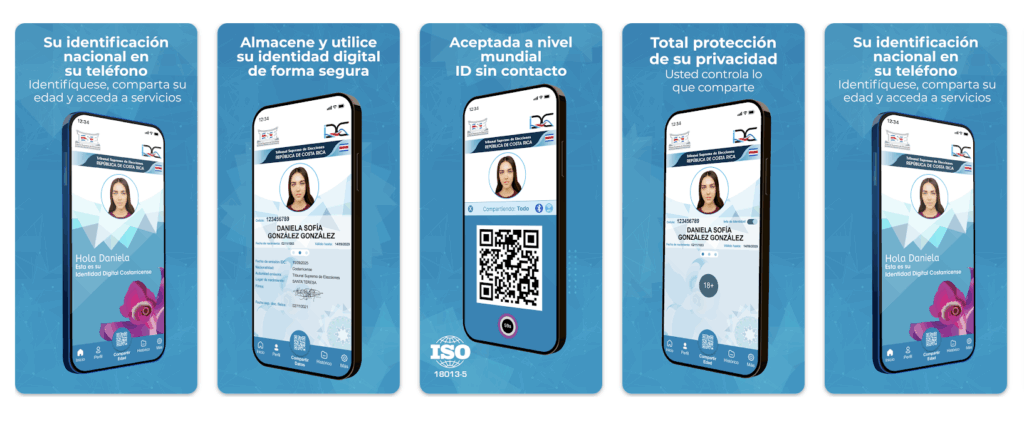
The details of how Costa Rica’s national digital ID will work and the app built by GET Group and Radiográfica Costarricense S.A. (RACSA) that it is based on have emerged.
The Identidad Digital Costarricense (IDC) launched in September, and complements the national ID card, the cédula, as a legal equivalent rather than a replacement. The digital ID is activated with face biometrics and a PIN, and intended to streamline everyday transactions. Facial recognition and the PIN are also used to access the ID, and it can be verified in real-time through a companion verifier app.
Costa Rica added facial recognition to its national biometric system back in 2019.
IDCs will be valid for four years, and costs Costa Ricans 2,600 colón (approximately US$5). It is available, on a voluntary basis, to Costa Ricans 18 years of age and above. The digital ID can be remotely deactivated in the case of a lost or stolen phone, and downloaded to a new device at no cost.
The rollout of the digital ID was temporarily paused shortly after its September launch to clear a backlog caused by high demand. TicosLand reports that nearly 30,000 Costa Ricans applied for the digital ID within its first two weeks, prompting a temporary closure of the application portal.
Costa Rican institutions have six months to adopt the digital ID, and Banco de Costa Rica and Claro are named in the announcement as early adopters.
Xenia Guerrero Arias, TSE’s General Director of Technological Strategy says the IDC will enable digital transformation among public and private sector institutions in the country, and be useful for online transactions “in the very near future.”
The IDC mobile wallet solution and verifier platform (Verificador IDC) are both built by GET Group.
“This launch marks a historic milestone for Costa Rica and GET Group alike. It’s the first step in building a comprehensive Digital ID ecosystem in Costa Rica,” says Joshua M. Mormol, managing director for LATAM at GET Group. “Our solutions will empower the government to modernize services, while enabling banks, telecoms, and citizens to benefit from faster, safer, and more inclusive digital identity.”
The national digital identity application initiative was led by Costa Rica’s Supreme Electoral Tribunal (TSE), and carried out by a consortium awarded the public tender. GET Group notes its contribution to the consortium included expertise in mobile identity platforms compliant with the ISO/IEC 18013-5 standard for mobile driver’s licenses (mDLs). RACSA is a state-owned telecom and IT company managed by the Instituto Costarricense de Electricidad (ICE) Group, and contributed expertise in biometrics, data center management and cybersecurity, according to the announcement. Tech5 also contributed to the project.
Korea’s KOMSCO also won a contract related to the digital ID project in 2024.
Related Posts
-
 January 27, 2025
 -
 January 2, 2025
 -
 March 24, 2025
 -
 May 22, 2025
 -
 April 2, 2025
 -
 July 21, 2025
Article Topics
biometrics | Costa Rica | digital ID | digital wallets | face biometrics | GET Group | Identidad Digital Costarricense | identity management | national ID

Comments